Get Paid to Watch Ads: Honest Guide to Turning Attention into Extra Cash
Découvrez l'histoire complète de nos fondateurs
Publié le :
3 mars 2026

Get Paid to Watch Ads: Honest Guide to Turning Attention into Real Cash (2026)
Key Takeaways
"Get paid to watch ads" describes a real way to earn money online where platforms share a portion of advertising revenue with users. The model is legitimate on established platforms — but on most of them, earnings are modest, typically a few dollars per week rather than anything resembling a salary.
A structural exception emerged in 2026: Monamedia pays €0.10 per 10-second ad because it cuts the ad-network middlemen out of the revenue chain entirely. The rate isn't a marketing claim — it's a direct result of how the platform is built.
Users receive payment because advertisers buy access to their attention and data. On legacy platforms, networks take 90%+ of the spend before any of it reaches you. On direct-to-user platforms like Monamedia, far more of the advertiser's money actually reaches the viewer.
Scams and exaggerated promises are widespread. Any platform claiming you can earn $100 per day simply by watching ads should be treated with extreme skepticism. Stick to platforms with verified payment histories and structural transparency about where the money comes from.
This guide covers how the system works, realistic earnings expectations, the best platforms to consider, safety checks to avoid scams, and why a small handful of new platforms are quietly rewriting the economics of the entire category.
How Does Getting Paid to Watch Ads Actually Work?
Reward-based advertising operates on a simple principle: advertisers pay to reach engaged audiences, and platforms share part of that payment with users who actually consume the content. This is the practical layer of the broader "attention economy" — where your focus is treated as a scarce commodity that brands are willing to purchase in micro-payments.
The legacy money flow works like this:
Brands hire ad networks to deliver impressions
Networks aggregate inventory and distribute it across reward platforms
Platforms deliver ads to users and pay them a thin slice of the spend
Users earn pennies per ad — typically $0.01–$0.05
The reason payouts are so low isn't malice. It's structural. By the time the advertiser's money has passed through one or two networks plus the platform layer, almost nothing is left for the actual viewer. On legacy GPT apps, the user captures roughly 1–5% of the original ad spend.
Common ad formats include:
Standard video ads (15–60 second promotional clips)
Pre-roll style clips (YouTube-style ads before content)
App install promos (longer demos rewarding app downloads)
Interactive ads (quizzes, polls, or clickthrough tasks)
Short ads (quick 10–30 second branded videos)
Reward structures vary by platform. Some use point systems where users earn points that convert to PayPal cash or gift cards. Others display direct cash amounts per task. A new category — Real Attention Economy platforms like Monamedia — pays cash directly to an in-app wallet with no intermediary conversion.
No special skills or upfront investment are required to start. Just an internet connection and spare time. However, the time-per-dollar ratio is the variable that determines whether the activity is worth doing — and that ratio depends almost entirely on how many layers of middlemen sit between the advertiser and you.
Why Do Companies Pay You to Watch Ads?
The digital advertising industry spends hundreds of billions annually competing for limited human attention. Brands that traditionally paid TV networks and large websites for impressions now seek platforms that can guarantee real, trackable engagement from actual humans — because the rest of the internet is increasingly polluted with bots, click farms, and inflated metrics.
Platforms prove engagement through completed views, answered questions, clicks, app installs, and time on page. These metrics allow advertisers to measure campaign performance precisely and optimize spending in real time. For small businesses with limited budgets, reward platforms offer a measurable, performance-based alternative to expensive traditional advertising.
Paying users directly can be cheaper and more effective than traditional TV or generic banner campaigns with uncertain impact. When users opt in to watch video ads, advertisers know they are reaching receptive audiences rather than passive viewers who ignore commercials.
Here's the catch in the legacy model: your payment represents a tiny slice of the advertiser's budget. Most of the money goes to ad networks running and managing campaigns. The data component is also significant — targeting and performance tracking rely on aggregated user data, which is why reviewing privacy policies matters before joining any platform.
The newer direct-to-user model (Monamedia and similar) eliminates the ad-network layer entirely. Advertisers pay the platform directly via subscription (in Monamedia's case, €250/month for 12 months including a free website). That subscription revenue funds the user payouts. The viewer captures a much higher share of the spend because there's no network taking 90% in between.
How Much Money Can You Really Make Watching Ads?
Let's be direct. The honest answer depends entirely on which model you're participating in.
On legacy GPT platforms (Swagbucks, InboxDollars, MyPoints, PrizeRebel, ySense): typical earnings are $5–$30 per month for 15–30 minutes of daily activity. The average payout per ad ranges from $0.01 to $0.05. This translates to roughly $0.50–$2 per hour of actual attention — well below minimum wage in any developed country.
On direct-to-user platforms (Monamedia): the published rate is €0.10 per 10-second ad watched, credited directly to your in-app wallet. That's roughly €0.60 per minute of actual ad viewing — a structural multiple of the legacy rate, not because the platform is being generous, but because there's no ad-network middleman extracting margin.
Here's the side-by-side at a glance:
Model | Rate per ad | Monthly earning ceiling | Why the rate is what it is |
|---|---|---|---|
Direct-to-user (Monamedia) | €0.10 per 10-second ad | Variable, bounded by local ad availability | No ad networks; brand subscription funds payouts directly |
Legacy GPT (Swagbucks, InboxDollars, MyPoints, etc.) | $0.01–$0.05 per ad | $5–$30/month for casual users | Ad networks take 90%+ of spend before user payment |
Crypto/token (JumpTask) | Token-dependent | Variable | Token value fluctuates 20–50% monthly |
Survey-heavy (PrizeRebel, ySense) | Surveys $0.50–$5 each, ads minor | $5–$25/month | Ad watching is a side activity, not the main earner |
Key factors affecting earnings on any platform:
Country. Users in the US and Western Europe typically see higher-paying ad inventory on legacy GPT platforms. Monamedia's rate is fixed per ad regardless of country, but ad availability scales with local advertiser activity.
Available inventory. Ad supply fluctuates daily and seasonally on every platform.
Time invested. More hours means more earnings, but diminishing returns once you exhaust available inventory.
Activity mix. On legacy platforms, combining surveys, offers, and ad watching is necessary to reach meaningful totals. On Monamedia, ad watching is the main mechanism.
Any platform promising "$100 per day just watching ads" is almost certainly misleading or a scam — the mathematical ceiling of the model makes such claims impossible on legacy platforms. Monamedia's higher per-ad rate makes higher monthly totals genuinely possible in regions with active advertiser density, but is still bounded by how many ads actually exist to watch.
Treat ad watching as background or sidetime income rather than a primary job. Track your real hourly rate per platform and drop anything that pays below your time's worth.
Best Platforms to Get Paid to Watch Ads
Selecting platforms requires evaluating track record, transparent payouts, multiple earning methods, and structural model. The following list covers established players and the new direct-to-user category — not obscure, untested sites that might waste your time.
All listed platforms are free to join. Availability and payout options vary by country.
Monamedia — The direct-to-user model (Featured)
Best for: Anyone who wants the highest per-ad rate in the category, with cash credited directly to an in-app wallet and full freedom over how to use it.
Monamedia is the world's first Real Attention Economy platform. The model:
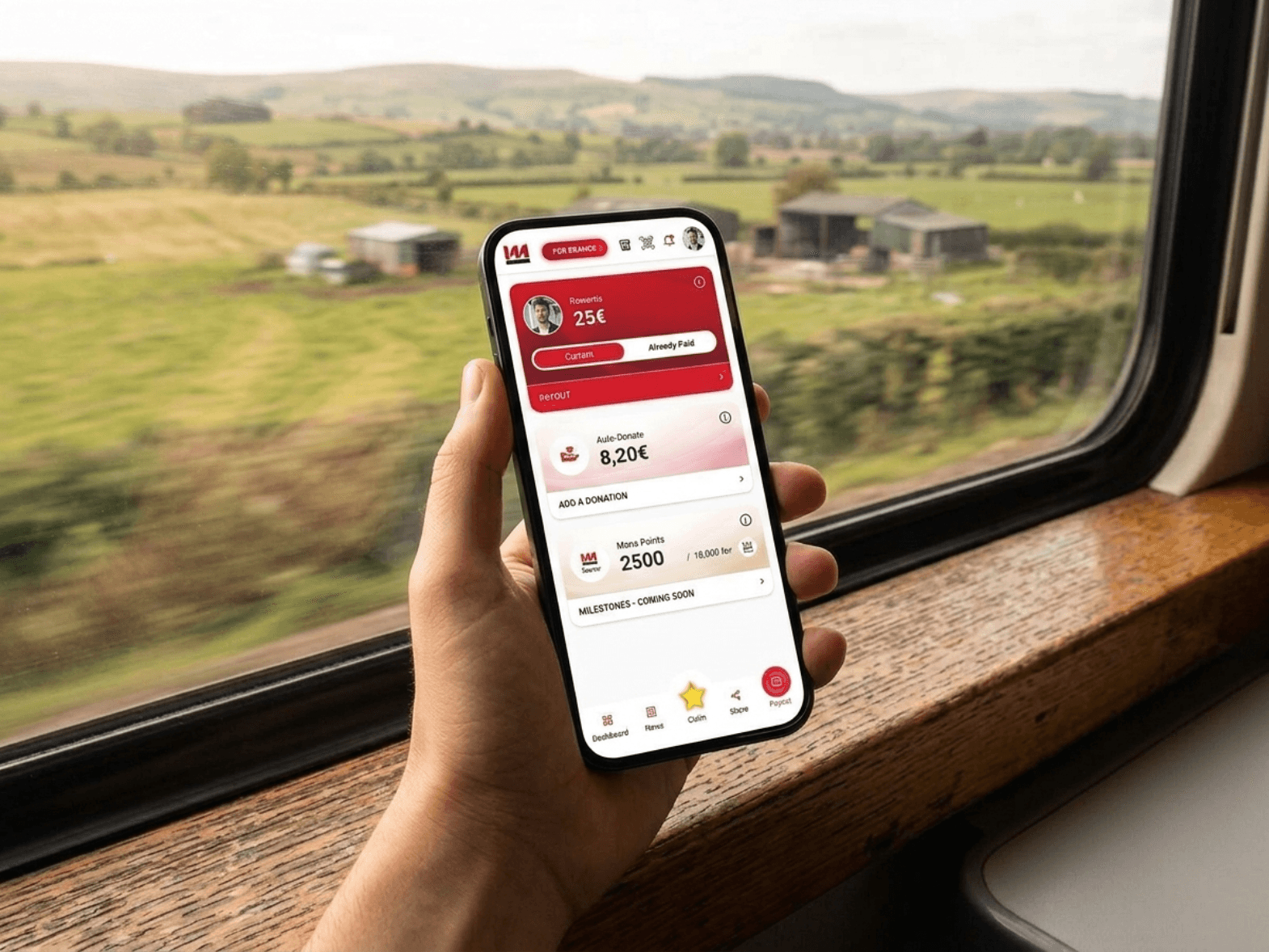
Watch a 10-second local ad → earn €0.10 credited to your in-app wallet
Repeat as ads are available in your region
Use the money however you want — withdraw, save, spend on whatever you choose
What makes Monamedia structurally different:
No ad-network middlemen. Brands subscribe directly at €250/month for 12 months (free website included). That subscription revenue funds your payouts. The viewer captures a meaningfully larger share of the original ad spend.
theFIVE™ contractual guarantees. Five written commitments protecting both advertisers (from bot traffic) and users (from arbitrary payment changes or denial). This is structural transparency, not marketing language.
Cash to wallet, free use. Once the money is in your account, it's yours. No conversion rates, no points, no forced redemption category, no minimum redemption hoops.
Available worldwide. Launched from Monaco, expanding across France, Portugal, Denmark, Switzerland, the UK, and beyond. Ad inventory in your region grows as more local businesses join.
Honest caveat: like every ad-watching platform, your monthly earnings ceiling is set by ad availability in your region. Monamedia's per-ad rate is structurally higher than legacy GPT apps, but you still can't watch ads that don't exist. In regions with active partner density, balances accumulate quickly; in newer markets, inventory builds as the network grows.
→ Sign up free at monamedia.mc
Swagbucks
Swagbucks launched in 2008 and has paid out hundreds of millions of dollars to users. Users earn points (SB) for watching video playlists, completing surveys, playing games, and shopping through their portal.
The "Watch" feature offers themed video playlists covering news, entertainment, and sponsored content. You run playlists and earn small amounts of SB per completed set. Multiple earning routes include daily bonuses, referral bonuses, and promotions.
Payout methods: PayPal cash and a wide range of gift cards (Amazon, Visa, others). Strong availability in the US, UK, and Canada.
Downsides: repetitive playlists and very low earnings per hour of pure video watching. The per-ad rate sits at the low end of the legacy GPT range.
InboxDollars
A cash-based platform popular in the United States, paying directly in dollars instead of points. This transparency means you see actual cash amounts per activity without conversion calculations.
Users earn by watching short sponsored videos, reading promotional emails, playing games, and completing surveys. Sign-up bonus helps reach the minimum threshold faster.
Payout: PayPal or check, with a moderate minimum cashout that may take beginners several weeks to reach. Ad inventory comes in bursts.
Suits users who prefer dollars over points and have patience with cashout thresholds.
MyPoints
Combines watching ads with cashback for online purchases at hundreds of retailers, plus surveys and special offers. Ideal for regular online shoppers stacking multiple earning methods.
Video playlists award points after a set number of completed views. Convert points to PayPal cash or gift cards.
Strengths: shopper focus, frequent bonuses on specific stores, long platform history. Limitations: modest earnings from ads alone, higher PayPal cashout thresholds compared to gift cards.
PrizeRebel
GPT (get-paid-to) site emphasizing surveys, offers, and some video content. Users earn points via sponsored video streams, micro tasks, and offer walls.
Low payout threshold allows cashouts via PayPal or gift cards without huge balances. Loyalty tiers reward consistent users with higher rates.
Surveys frequently screen users out, which can frustrate. Works for users who enjoy task variety and want quick access to tangible rewards.
ySense
Evolved from the former ClixSense into an international reward platform offering surveys, offers, and ad viewing. Users earn mainly through survey routers and offerwalls that sometimes include video ad tasks.
Payment options: PayPal, Payoneer, Skrill, and selected gift cards — flexible for users outside North America.
Pure "get paid per ad view" opportunities aren't constant. Income usually comes from combining ad watching with surveys. Solid for international users diversifying across multiple platforms.
Crypto and token-based options
Some platforms pay in cryptocurrency or proprietary tokens for watching videos or completing tasks. Payouts may fluctuate in value, adding both upside potential and volatility.
Verify before using: token liquidity, withdrawal fees, wallet compatibility, regional restrictions. Treat crypto earnings as speculative bonuses rather than guaranteed cash equivalents.
How to Maximize Your Earnings from Watching Ads
Optimization means stacking small boosts rather than expecting big payouts from a single trick.
1. Start with the platform that has the highest structural rate. This is the single most leveraged decision you can make. Hours of grinding on a $0.01-per-ad platform won't catch up to the same hours on a €0.10-per-ad platform. Choose Monamedia first if it's available in your region, then add legacy GPT platforms for additional inventory during downtime.
2. Combine multiple platforms for inventory diversity. Once your primary platform's inventory is exhausted for the day, switch to a secondary for the spare minutes. 2–4 reliable platforms is the sweet spot — beyond that, you're spreading attention too thin.
3. Stack activities on legacy platforms. Pure ad watching alone won't move the needle on Swagbucks-style apps. Add surveys, app installations, cashback shopping, and referral bonuses to reach payout thresholds faster.
4. Schedule wisely. Run video playlists during low-focus times — evenings, commutes, chores. Reserve concentration for higher-paying tasks.
5. Capture bonuses. Use sign-up bonuses and referral programs strategically. These often deliver more cash in week one than weeks of grinding.
6. Track performance honestly. Keep simple notes on which platforms and tasks provide the best returns per hour. Drop anything below your time's worth — including platforms that "feel" productive but pay below $1/hour effective rate.
Spotting Scams and Protecting Yourself
"Get paid to watch ads" is a popular phrase exploited in many scams. Legitimate reward sites will never charge an upfront subscription fee to access earning opportunities.
Red flags to watch for:
Promises of very high daily income ($100+) for minimal effort
Requests for upfront payment before earning
Demands for sensitive data like ID photos without clear payout justification
No verifiable payment proof or user reviews
Recently launched sites with no track record
Vague or absent terms of service
Structural anti-scam signals to look for instead:
Documented payment history measured in years (Swagbucks since 2008)
Public, accessible terms of service
Contractual guarantees (Monamedia's theFIVE™ is one example of a platform formalizing its commitments to both advertisers and users)
Transparent explanation of where revenue comes from
BBB rating or equivalent regional trust signal
Protect yourself by:
Using strong, unique passwords for each platform
Enabling two-factor authentication, especially for PayPal or wallet accounts
Limiting shared personal data to what's strictly necessary for payouts
Never providing bank login credentials to any platform
Regularly reviewing privacy policies for changes
Anything offering "life-changing" money for watching ads alone should be treated with skepticism. The honest reality is that even the best platforms in this category pay supplemental income, not salaries — and platforms claiming otherwise are usually misrepresenting either their model or their math.
Pros and Cons of Getting Paid to Watch Ads
Honest evaluation requires looking at both sides.
Pros:
No experience, education, or special skills needed
Free to start — no investment required
Flexible timing that fits around other activities
Can run alongside work, chores, or entertainment
Converts otherwise idle time into real cash
On direct-to-user platforms like Monamedia, the rate per minute is genuinely meaningful rather than token
Cons:
On legacy GPT platforms, earnings per hour are very low (often $1–$3)
Technical glitches and limited ad inventory on some days
Regional restrictions affect availability and payout rates
Potential privacy concerns from data collection
Repetitive content can become boring quickly
Opportunity cost may favor skill-building if you have time for it
The psychological aspect matters. Chasing tiny rewards feels demotivating if expectations are unrealistic. The advantage of newer platforms with structurally higher per-ad rates is that the reward-to-time ratio passes the "is this actually worth doing" test for more users.
Alternatives to Watching Ads (Within and Beyond the Category)
If pure ad watching feels low-value, two paths exist.
Better alternatives within the ad-watching category
The most impactful upgrade is moving from legacy GPT apps to direct-to-user platforms. Monamedia's structurally higher per-ad rate captures most of the available improvement in the category itself — without having to learn new skills or change activities.
User testing platforms (UserTesting, Userlytics, UserBrain, TryMyUI) also pay meaningfully more per session ($10–$60 for 10–20 minutes) but require active feedback rather than passive viewing, plus a quiet environment and recording setup.
Alternatives beyond ad watching
If you're willing to invest in different activities:
Freelancing. Writing, design, coding, and virtual assistance offer higher pay but require specific skills. Platforms like Upwork and Fiverr connect freelancers with clients worldwide.
Online tutoring. Teaching languages, academic subjects, or specialized skills can translate knowledge into $15–$40/hour rates via Preply or Wyzant.
Content creation. Blogs, YouTube channels, and social media accounts take time to build but can generate scalable income through ads, affiliates, and sponsorships.
Market research. Respondent.io and similar pay $50–$300+ per in-depth research session, though qualifying for studies is irregular.
Simple ecommerce. Print-on-demand, dropshipping, and digital products require learning but offer scalable income beyond trading time for pennies.
Gradually shift from purely passive low-skill tasks toward activities that build marketable skills and assets over time. Ad watching makes the most sense as background income — not as the only thing you do.
Conclusion: Is Getting Paid to Watch Ads Worth It in 2026?
The honest answer is: more worth it than it used to be, but only on the right platform.
On legacy GPT platforms (Swagbucks, InboxDollars, MyPoints, PrizeRebel, ySense), watching ads remains a small pocket-money activity. The model works — advertisers pay, platforms share, users receive — but expectations must stay realistic. A few dollars per week is the honest ceiling for most users.
On direct-to-user platforms (Monamedia), the rate per ad is structurally higher because the ad-network middleman layer has been removed from the revenue chain. €0.10 per 10-second ad isn't a marketing claim — it's the math of cutting out the intermediary that traditionally captures 90% of the spend.
The clearest play in 2026:
Start with Monamedia if it's available in your region — sign up free at monamedia.mc. This delivers the highest per-minute return without any skill requirement.
Add 1–2 legacy GPT platforms (Swagbucks, InboxDollars) for inventory diversity during downtime when Monamedia ads are temporarily exhausted.
Run video playlists in the background during cooking, commuting, or low-focus tasks — the goal is converting idle time into real cash, not sacrificing productive hours.
Track your real hourly rate weekly. Drop anything that pays below your time's worth.
The "get paid to watch ads" category has been quietly transformed by direct-to-user platforms. The math is finally favorable enough that for many users, the activity is worth doing in its own right rather than as token side income.
Get Paid to Watch Ads: FAQ
Is getting paid to watch ads really legit?
The model is legitimate when handled by established platforms that share a portion of ad revenue with users. Many users have successfully withdrawn earnings to PayPal or redeemed gift cards from platforms like Swagbucks, InboxDollars, and MyPoints over years of documented payment history. Newer direct-to-user platforms like Monamedia formalize their commitments through structural mechanisms (such as the theFIVE™ contractual guarantees) rather than relying solely on platform reputation. "Legit" does not mean high-paying on most platforms — earnings are typically small on legacy GPT apps and structurally higher on direct-to-user platforms. Differentiate between reputable sites with clear histories versus scammy pages promising unrealistic income.
Why does Monamedia pay so much more per ad than Swagbucks or InboxDollars?
The rate difference is structural, not promotional. On legacy GPT platforms, advertiser spending flows through ad networks that take 90%+ of the budget before any of it reaches the platform — which then takes its own margin before paying the user. Monamedia operates a direct-to-user model: businesses subscribe to the platform at €250/month for 12 months (free website included), and that subscription revenue funds user payouts directly. With no ad network in the chain, far more of the original spend reaches the viewer — which is why €0.10 per 10-second ad is mathematically sustainable.
How much can I actually withdraw from Monamedia?
Your in-app wallet balance is your money. Once credit is in your account, you have full freedom over how to use it — withdraw, save, spend on whatever you choose. The platform doesn't lock the money into a specific category or force redemption through a restricted store. Practical monthly totals depend on how many ads are available in your region; in markets with active advertiser density, balances build quickly.
Do I have to pay taxes on money I earn from watching ads?
In most countries, income from reward sites counts as taxable income, even if small. The US, Canada, UK, and most European countries require reporting all income regardless of source. Keep basic records of payouts (screenshots, app statements, or email confirmations) to report accurately if required. This article does not provide tax advice — check local regulations or consult a tax professional for guidance specific to your situation.
Can teenagers get paid to watch ads?
Many platforms set minimum ages — often 13, 16, or 18 — in their terms of service. Some require parental consent for minors. Swagbucks allows users 13+, while InboxDollars requires 18+. For Monamedia, age requirements follow local regulations in each market. Parents should supervise sign-ups, ensure payouts go to appropriate accounts, and treat ad watching as pocket money rather than serious income for younger users.
What equipment and internet speed do I need?
A basic smartphone, tablet, or computer with a stable internet connection is sufficient for any ad-watching platform. HD video quality isn't strictly required — most platforms let you lower quality settings to save data on slower or capped connections. Running multiple videos across devices requires better bandwidth and may not be allowed under all platforms' terms. Check the terms of service before attempting multi-device strategies to avoid account suspension.
What should I do if a platform stops paying or closes?
Cash out regularly once you reach minimum thresholds rather than stockpiling large balances on any single platform — this reduces risk if a site experiences payment issues. If payments are delayed, contact customer support and check official status updates before assuming the worst (processing can take several business days). If a site disappears or becomes unresponsive long-term, you may not recover stored balances — another reason to join multiple platforms and diversify your earning strategy across several reliable options. Platforms with formal contractual commitments to users (such as Monamedia's theFIVE™ framework) reduce this risk by structuring the platform-user relationship more like a formal agreement than a casual rewards program.
Monamedia — the world's first Real Attention Economy. Users earn. Brands perform. monamedia.mc